Adaptor - Phase 2
The research program that answers the question Decode raises: once a person can see mismatch accurately, what should be built instead.
Adaptor is the research program that answers the question Decode raises: once a person can see mismatch accurately, what should be built instead? This is Phase 2 of the Demismatch stack - a multi-year program, not a shipping product. The work has two strands. Technology directions - tools that meet human mechanisms at their real resolution condition, rather than faking the signal. Four opening directions are in early specification: immune systems, return protocols, distributed presence, and mechanism-aware architecture. Reference cases - the non-technological arrangements of people, place, and rhythm the framework predicts will resolve mismatch, which the technology strand builds against. The shapes below are reference cases. The technology strand will be added to this page as it stabilizes.
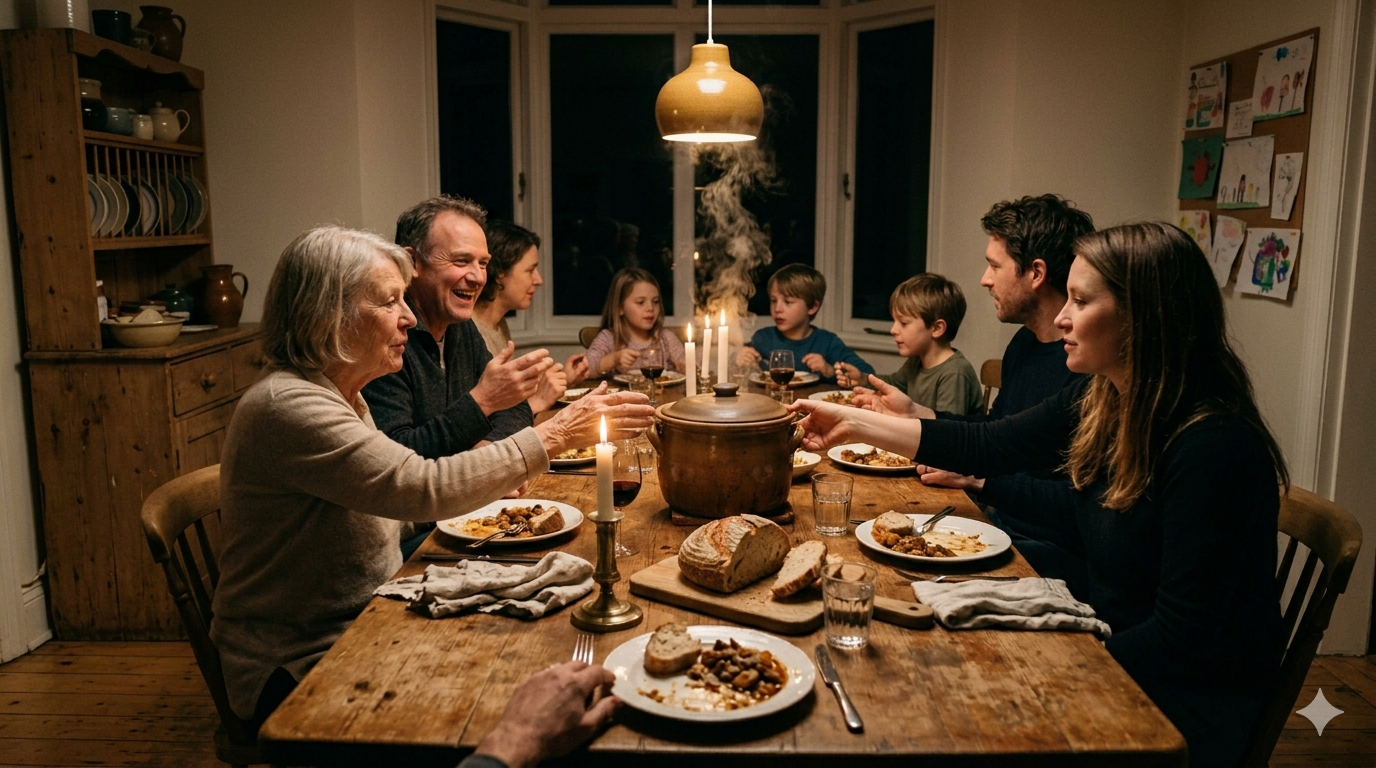
The Table
"8 people. Tuesday nights. Forever."
A standing weekly meal. Same 8-12 people. One house. One table. Someone cooks. Everyone eats. You talk. You clean up. You go home. That's the entire shape.
Food is the most universal survival need; the shared meal is the oldest human technology. What emerges without being designed: purpose (people are hungry, you cook), natural roles (the one who always brings dessert, the one who listens), leveled status, metabolized conflict, real bonding through repetition. The AI does exactly two things - make the first match, remove coordination friction - then it gets out of the way. Forever.
- Targets
- Shared food, purpose, role differentiation, conflict metabolism, ritual rhythm
- Proxy it replaces
- Delivery apps, solo meals, supper clubs with strangers, dinner parties as performance
- Real input
- Repeated presence around food with the same mortal bodies, week after week
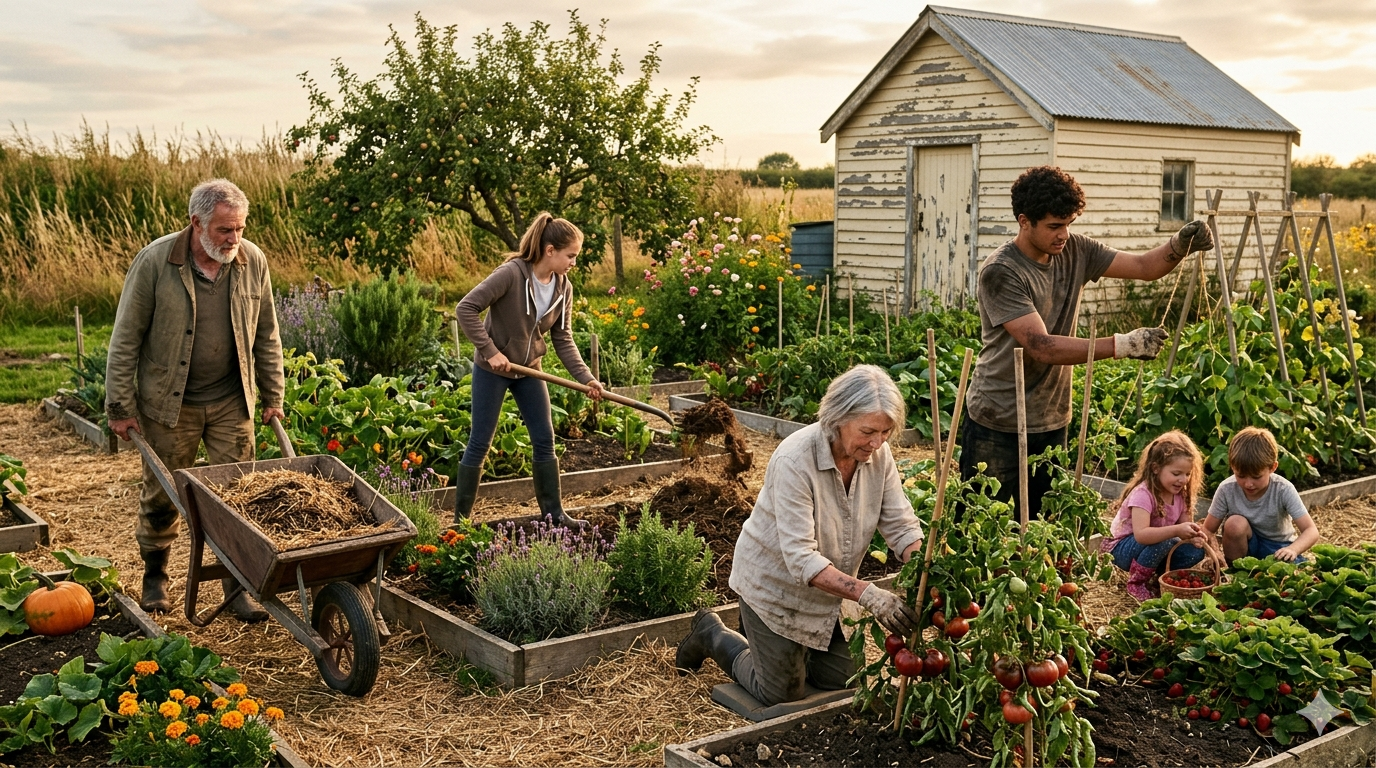
The Garden
"Grow food with your people. Eat it together."
Six to ten people share a real piece of land. A community plot, someone's backyard, an allotment, a rooftop, a vacant lot with permission. They grow actual food. They tend it together. They harvest it. They eat it.
The garden touches the most mismatch domains at once: movement, nature contact, diet, circadian, touch, microbial exposure, temperature, social, purpose, closed loops. Living things depend on your hands. The 70-year-old who knows how to grow food becomes the most valuable person in the crew. The garden feeds the table; the table celebrates the garden.
- Targets
- Nature contact, movement, diet, microbial exposure, purpose, intergenerational knowledge
- Proxy it replaces
- Supermarket food, gym exercise, indoor life, solo hobbies
- Real input
- Soil, weather, seasonal rhythm, and a crew that cannot do the work alone
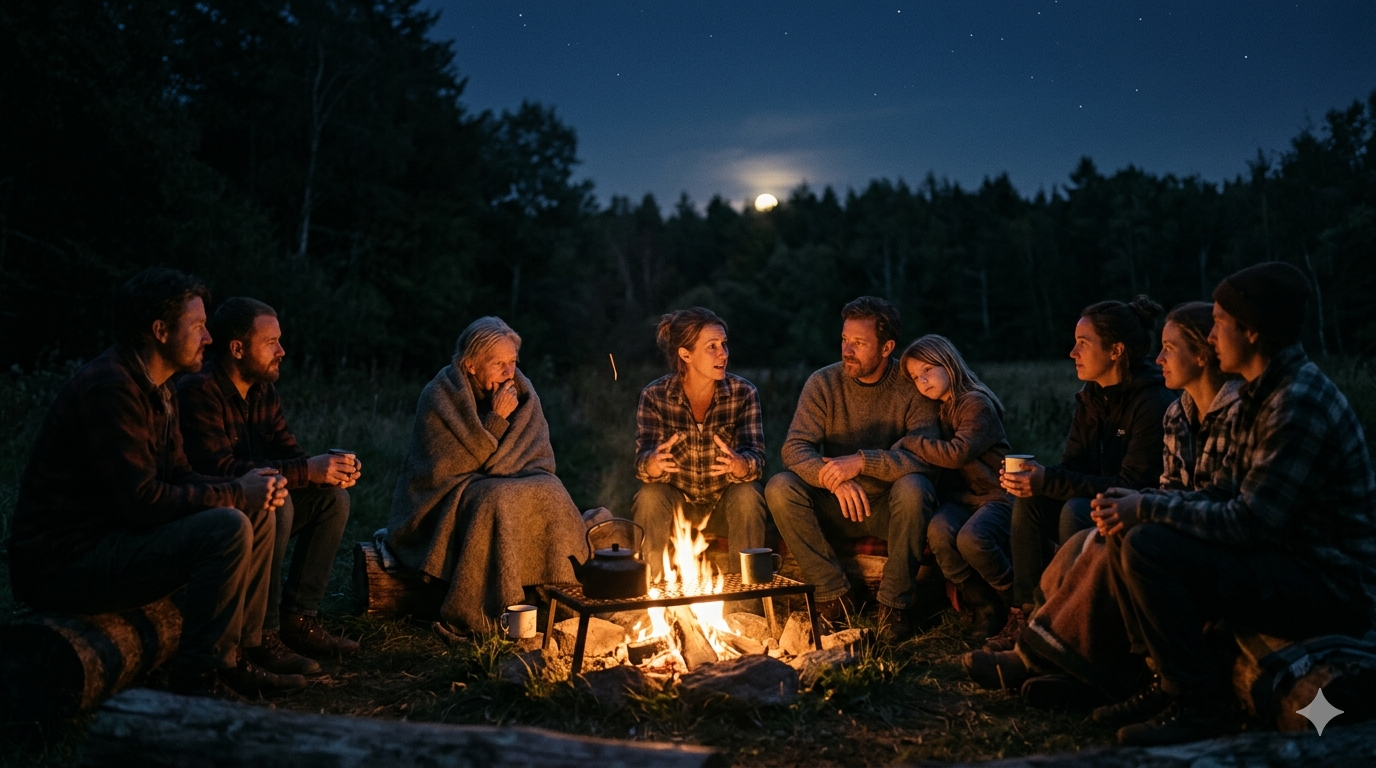
The Fire
"Bring people. Bring wood. That's all."
A literal fire. Outside. At night. With your people. Regularly. The fire circle is the single most referenced structure in the framework - two to four hours, every night, for 300,000 years. The whole band gathered. Stories, songs, gossip, conflict resolution, laughter, silence, processing.
Flicker triggers a parasympathetic response - heart rate drops, vigilance decreases. Firelight is the lighting we evolved reading faces in. The surrounding darkness creates a bounded space; the world shrinks to the circle. The app does infrastructure: finds fire-legal spaces, coordinates who brings wood, schedules the night. When the crew gathers at the fire, the app goes silent. It knows this is the moment it should not exist.
- Targets
- Circadian closure, social processing, storytelling, conflict metabolism, parasympathetic downregulation
- Proxy it replaces
- Screens after dark, meditation apps, end-of-day scroll, the electric living room
- Real input
- Flame, darkness, known faces, and the night ending communally
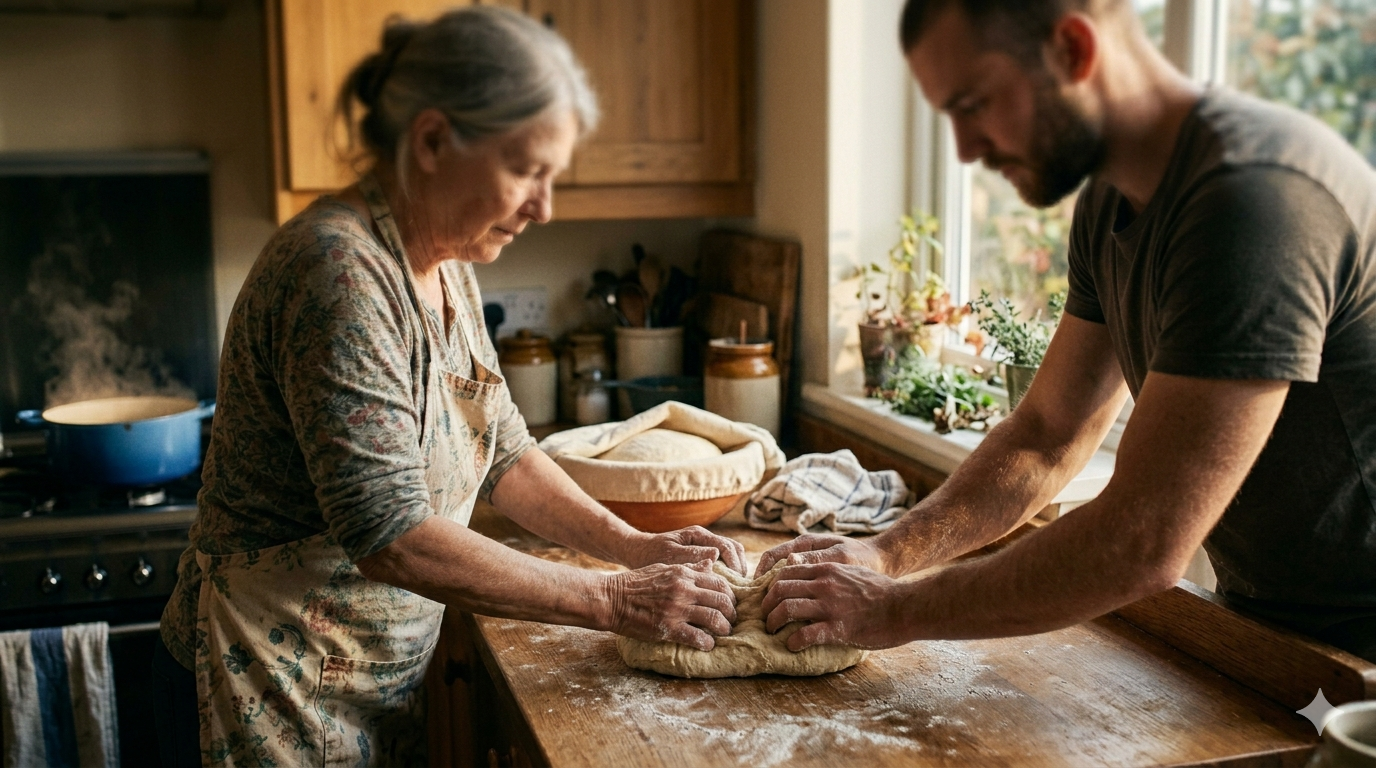
Crew Finder
"What would you do with your hands?"
One question. Not your skills, not your CV, not what you do for work. Your instinct. The thing you'd naturally reach for if a band needed a hand. Cook. Grow. Fix. Carry. Walk with someone. Sit with someone. Teach. The system matches your answer to a real situation nearby that needs exactly that, and to the crew already doing it.
This is not volunteering. Volunteering is charity - one-directional, a different crew each time, no accumulation. The Crew Finder is joining: the crew needs you and you need the crew. First visit, you show up and do the thing. First season, the rhythm adjusts around your presence. First year, your specific hands in this specific place become irreplaceable - not from skill, from accumulated purpose.
- Targets
- Role discovery, specific-contribution identity, band integration, purpose through accumulated presence
- Proxy it replaces
- Volunteer platforms, LinkedIn skill profiles, one-off helping-out, group chats with no real stakes
- Real input
- An instinct met by a real need, week after week, until your absence would be felt
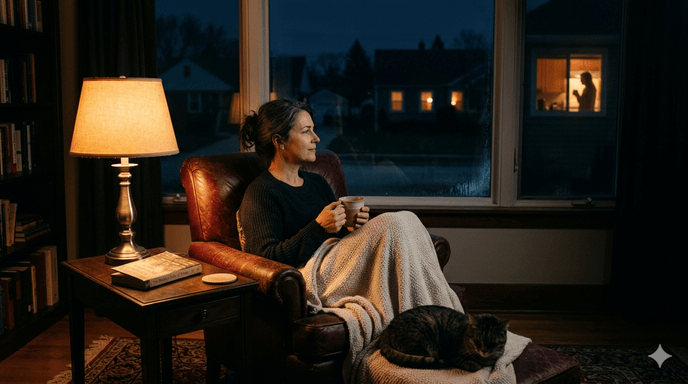
The Night Watch
"Someone's always awake. You're never alone at 3am."
The cruelest hour is 3am - when you can't sleep, when anxiety peaks, when the open loops scream loudest. In the EEA, 3am wasn't solitary; someone was always stirring in the camp - a baby, an elder, a fire tender. The Night Watch is an ambient connection layer for the hours between midnight and dawn. Not a crisis line, not a chat room. Just presence.
If you're awake, you can signal it - a gentle pulse to your band, no obligation. If two people are awake, you can open a quiet channel: ambient audio, someone else's kettle and breathing, the opposite of silence. No conversation required. A specific friendship forms between the regular 3am people - raw, honest, known differently than their daylight selves.
- Targets
- Night-time co-regulation, sleep-disruption isolation, 3am rumination, the modern absence of the night-watching camp
- Proxy it replaces
- 3am doomscrolling, sleep apps, crisis hotlines used for non-crisis loneliness, white-noise machines
- Real input
- The ambient knowledge that another mortal body is conscious in the dark with you
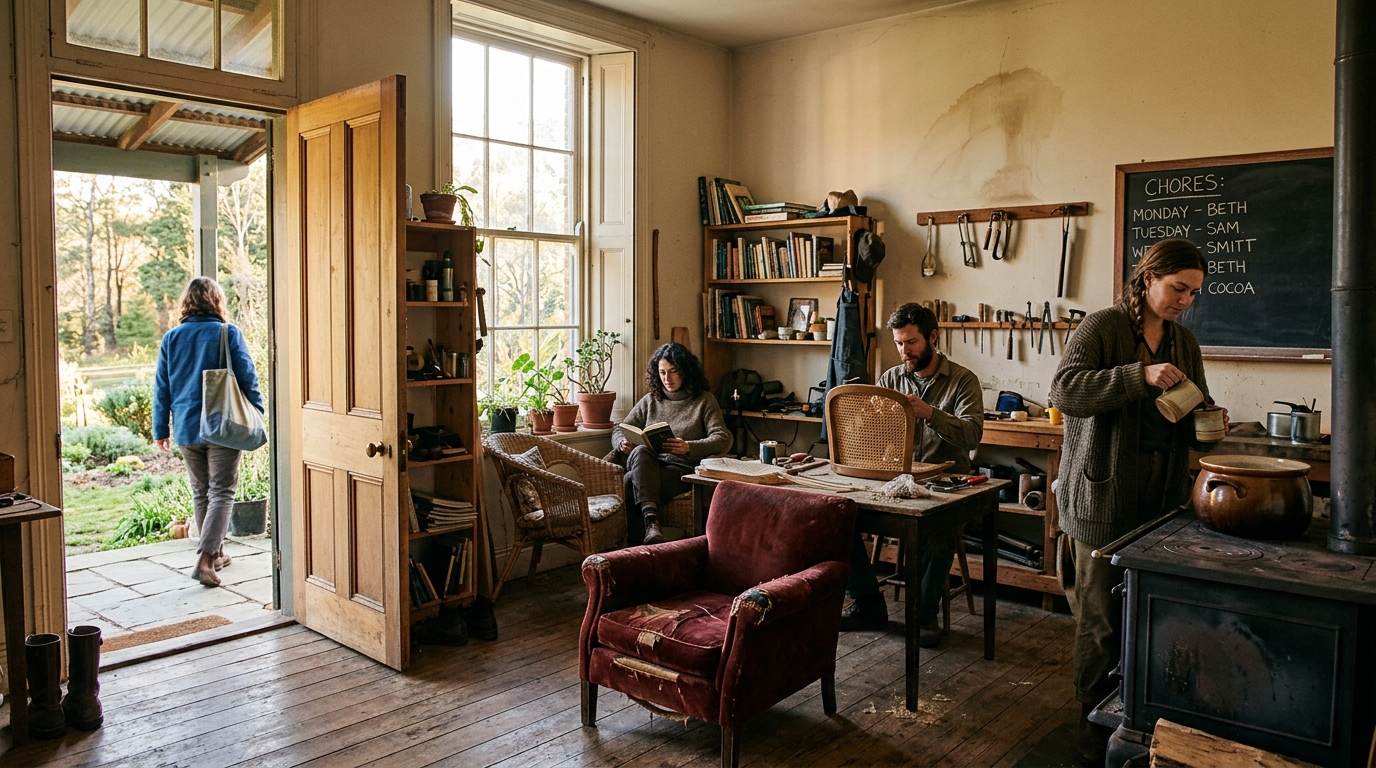
The Threshold
"One space. Always open. Come as you are."
Modern life eliminated the third place. Home is private; public space is commercial. There is nowhere to simply be, without paying, performing, or being watched. The Threshold is that space restored: physical, real walls, owned and maintained by the crew. A porch. A common room. A workshop. A community kitchen. Real key. Real smell.
You don't need a reason to go. You don't check if anyone's home - you have independent access. Sometimes someone is there, sometimes the room is empty and your crew's things are waiting. Band members drift in and out through the day; someone's always fixing something, reading, making tea, not performing any of it. Whatever happens, happens.
- Targets
- Third-place presence, ambient crew co-existence, the right to be without purchase or purpose, autonomy of access
- Proxy it replaces
- Commercial cafés and bars as "third places", shared Zoom rooms, calendared community meetings, rented event spaces
- Real input
- A physical space the band owns and enters independently - known smell, known chairs, known tools, hours spent just being there
The six shapes above are reference cases. The technology strand - immune systems, return protocols, distributed presence, mechanism-aware architecture - will be added to this page as it stabilizes.