For Therapists, Parents & Educators
You Already Know
"The child labeled 'ADHD' who can focus for hours on what interests them."
"The depressed client whose life actually lacks meaning."
"The anxious patient surrounded by strangers, not tribe."
You sense the standard approaches are missing something.
You're right.
See the ReframeAccurate Signals, Not Broken Brains
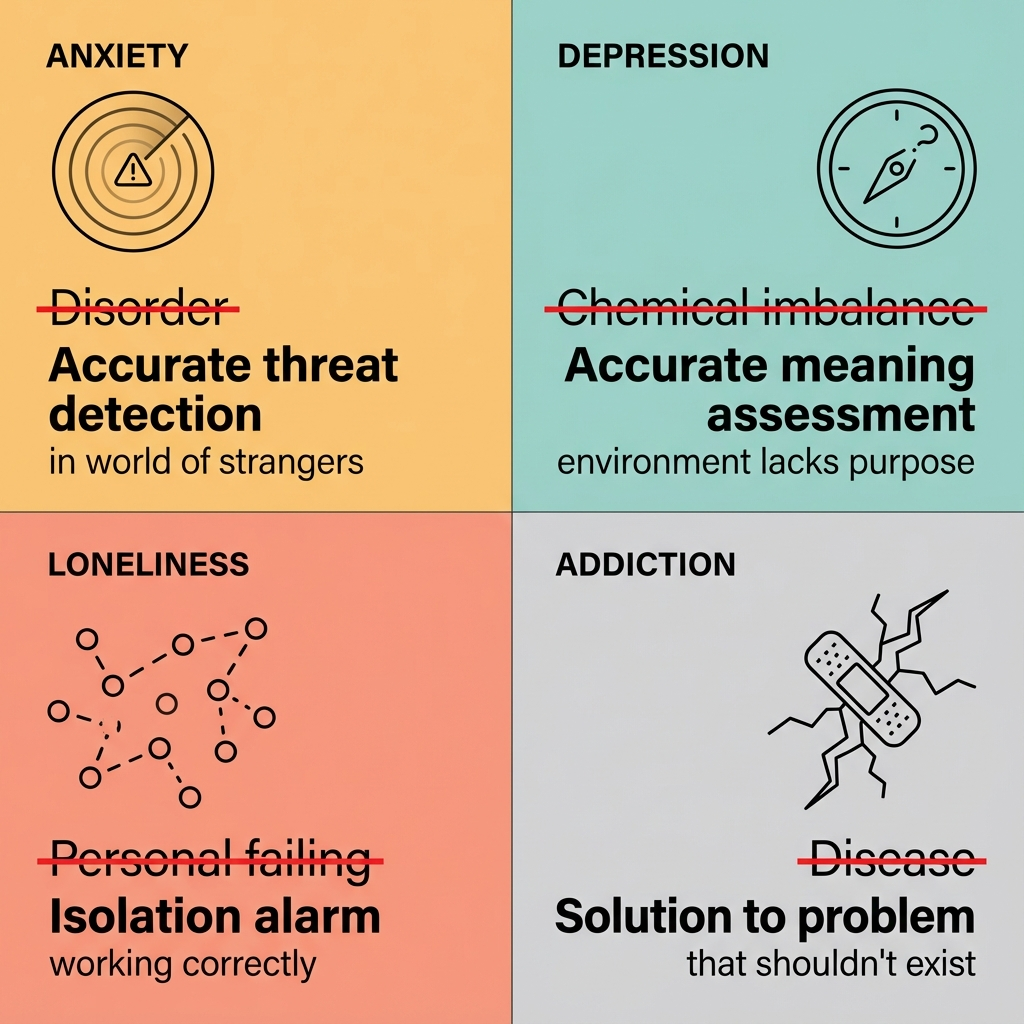
The signal is working correctly. The environment is wrong.
Anxiety
Disorder requiring management
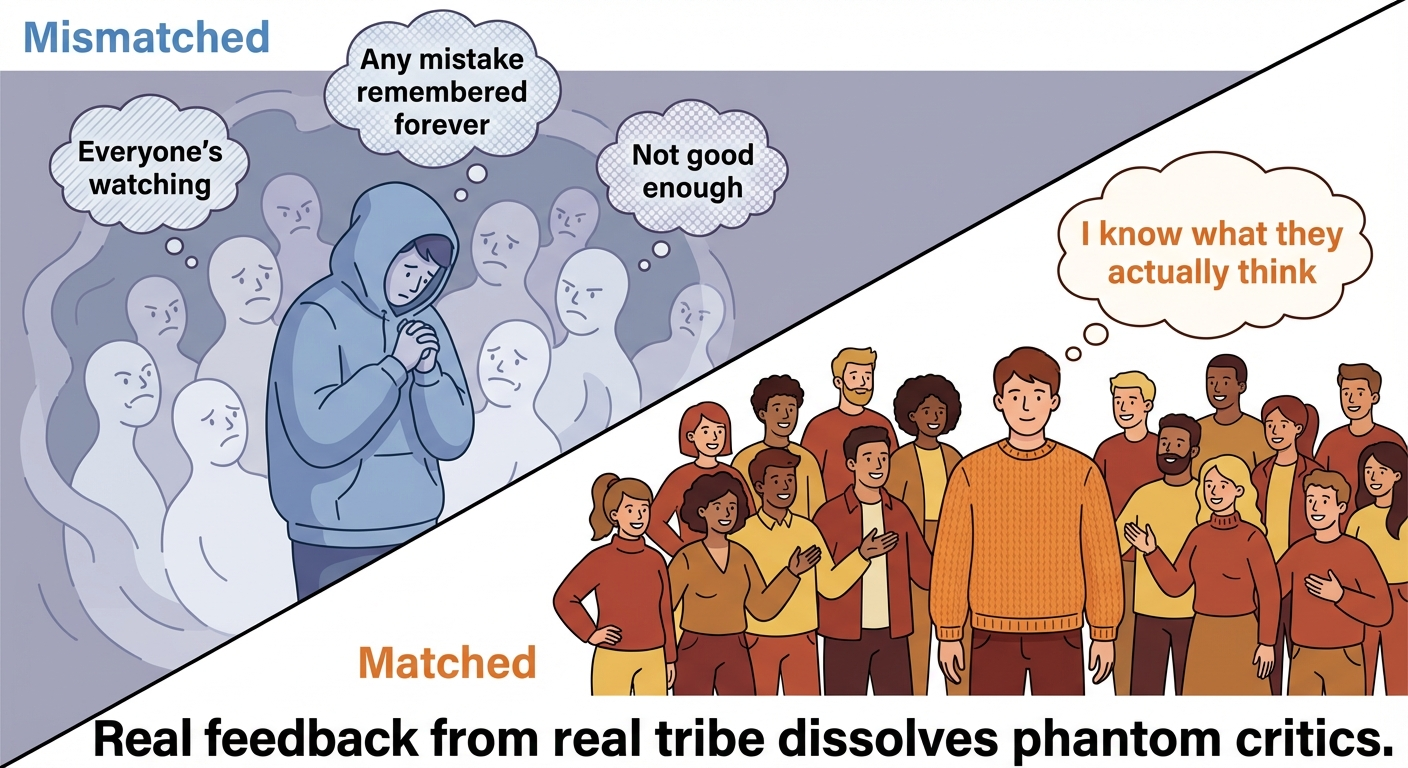
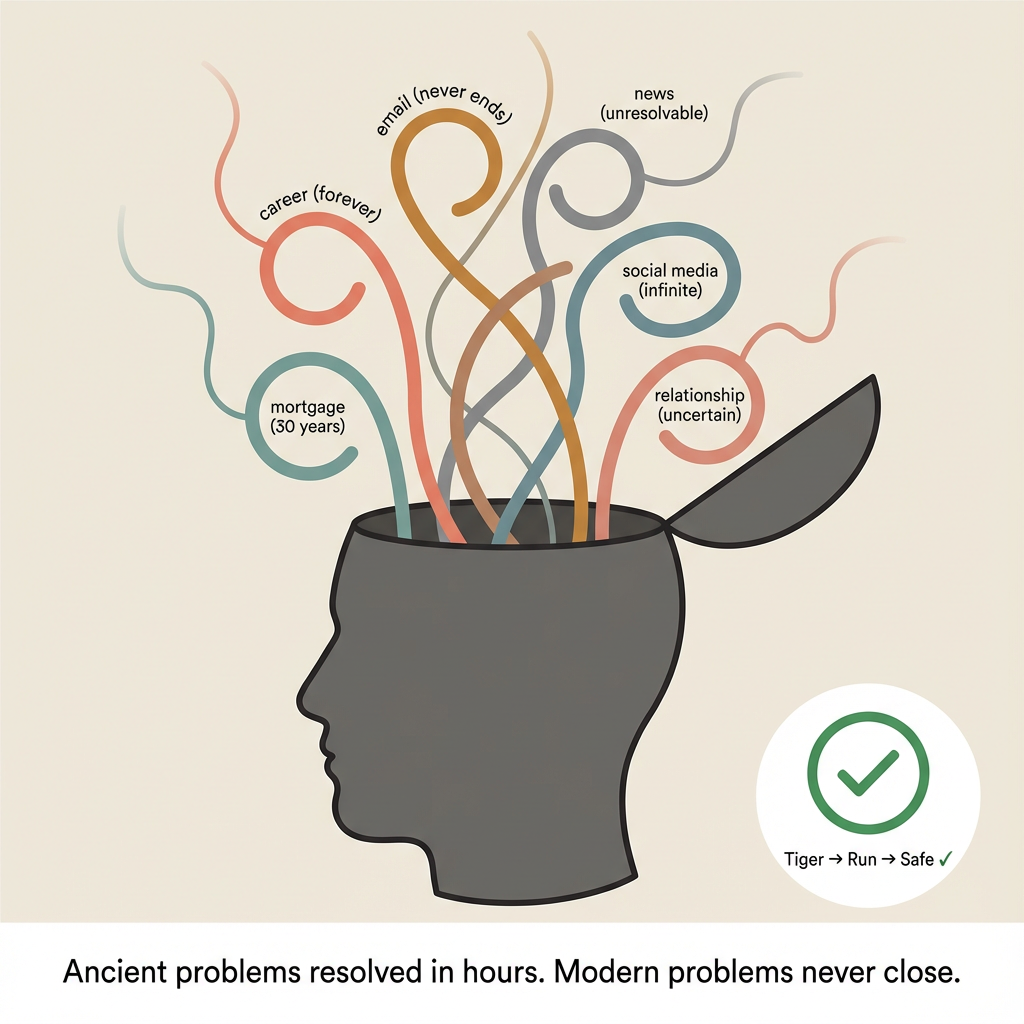
Actually: Accurate threat detection in an environment full of strangers and unpredictability
Depression
Chemical imbalance
Actually: Accurate meaning assessment in life lacking visible contribution and tribe
Loneliness
Social skills deficit
Actually: Accurate isolation alarm-surrounded by acquaintances, but no actual tribe
Addiction
Moral failing or brain disease
Actually: Drive-seeking redirected to proxies when real satisfaction is blocked
"ADHD"
Attention disorder
Actually: Hunter cognition-varied attention, movement-seeking, novelty-responsive-trapped in farmer environments
More on Signals
What Your Client Actually Needs
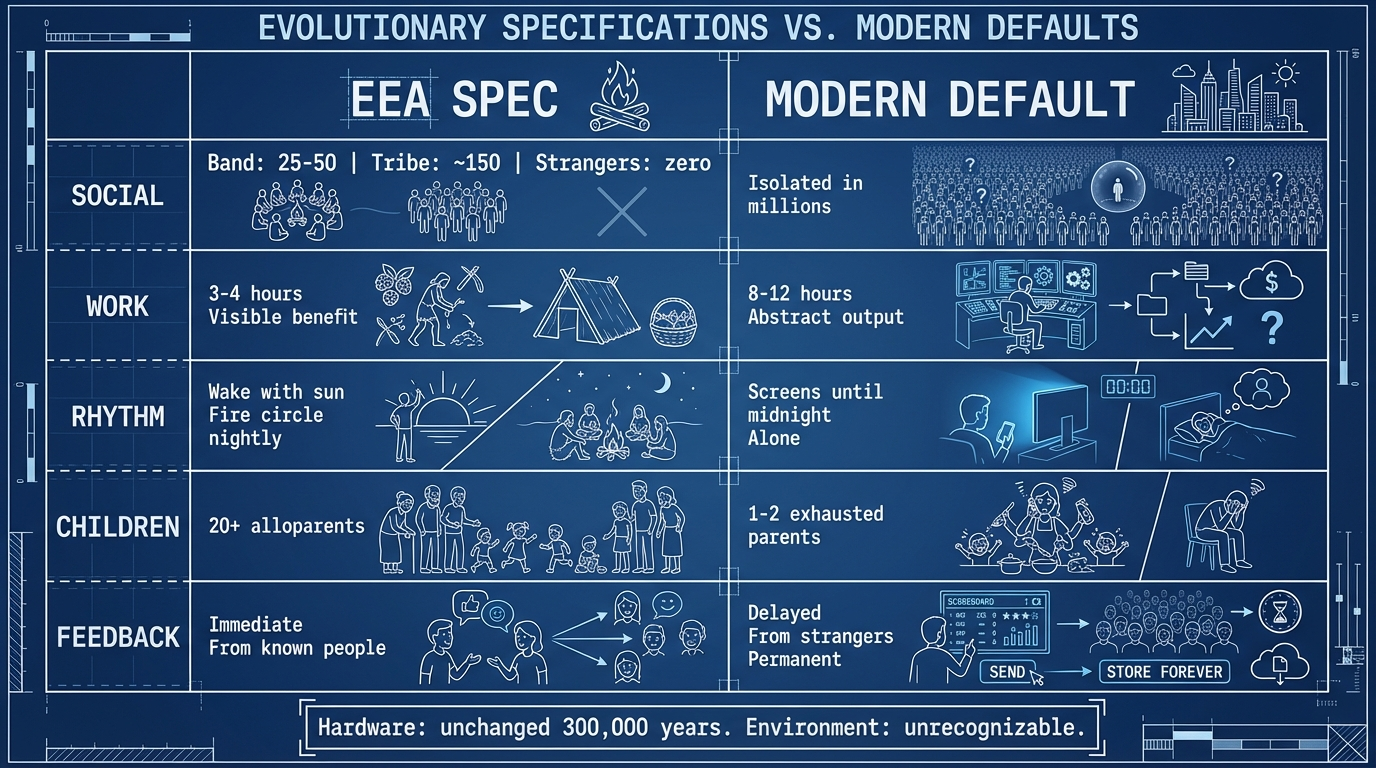
Before diagnosis, before intervention, before medication-assess environment.
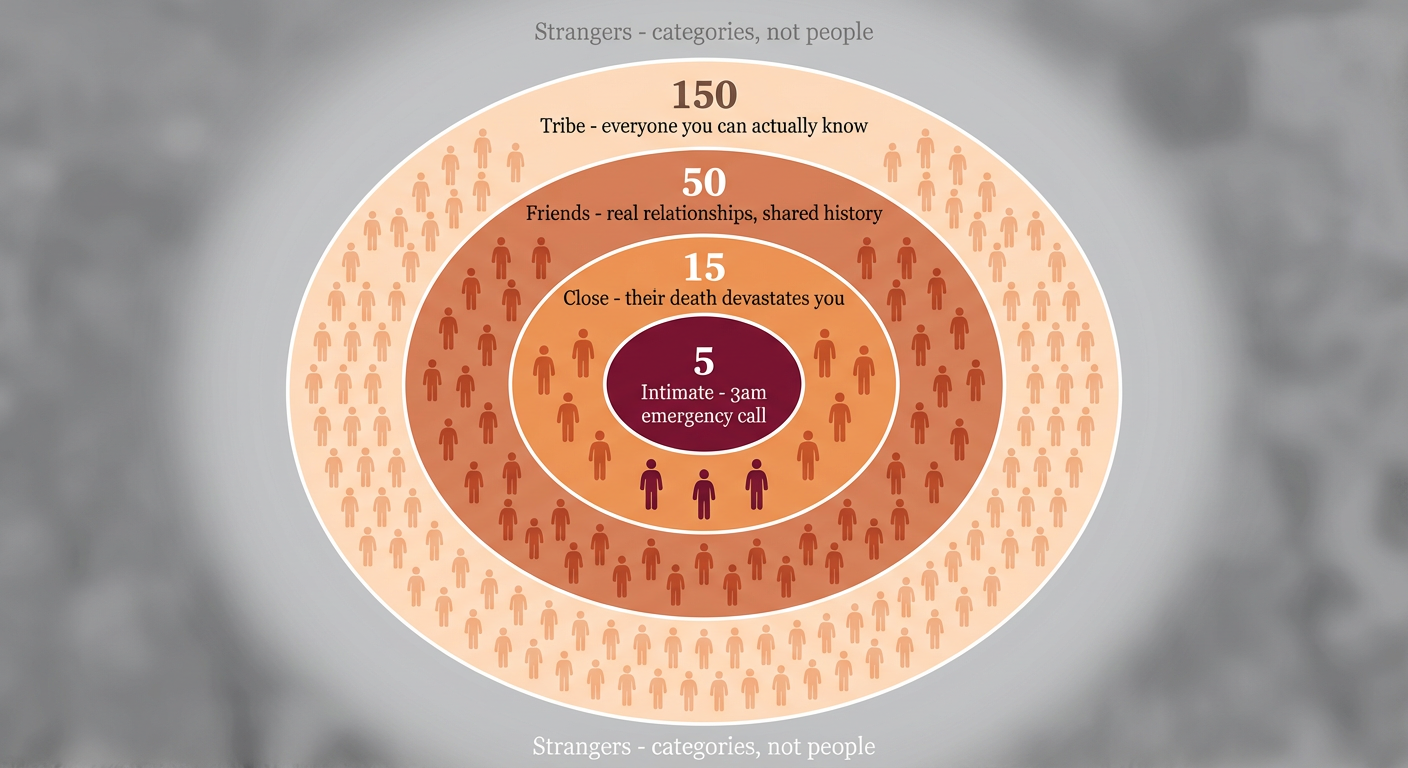
Tribe
- • Do they have 5 people who'd show up at 3am?
- • Do they have 15 people they see regularly?
- • Do they have ~150 people who know them?
- • Or are they drowning in acquaintances and followers?
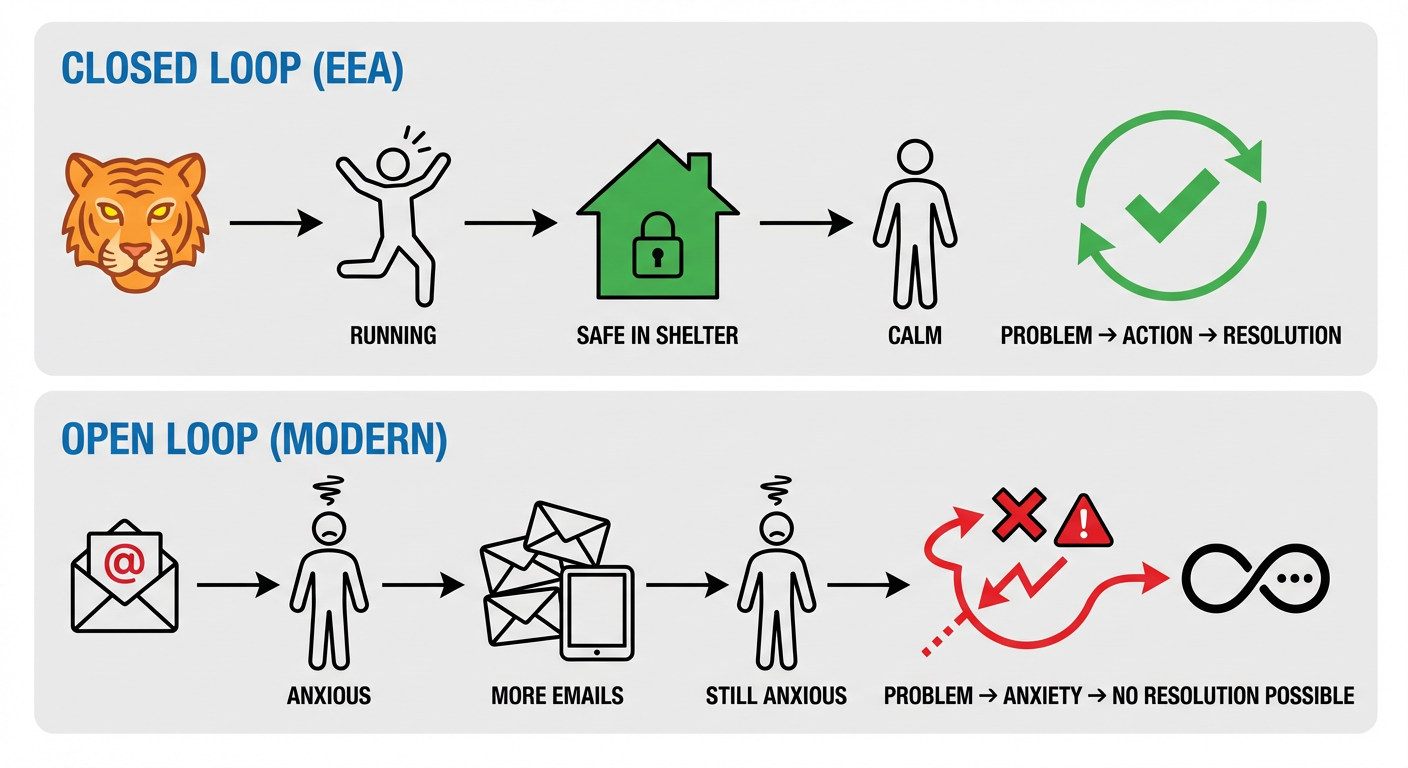
Closure
- • Can they complete meaningful tasks?
- • Do problems have resolution paths?
- • Or is everything infinite scroll, open-ended, never done?
Visible Contribution
- • Can they see who their effort helps?
- • Does anyone need specifically them?
- • Or do they feed metrics that disappear?
Physical Reality
- • Movement? Daylight? Nature?
- • Face-to-face time vs screen time?
- • Touch? Shared meals? Physical play?
Status at Knowable Scale
- • Compared against 150 or 8 billion?
- • Local and stable, or global and impossible?
Understanding Needs
What You Can Do
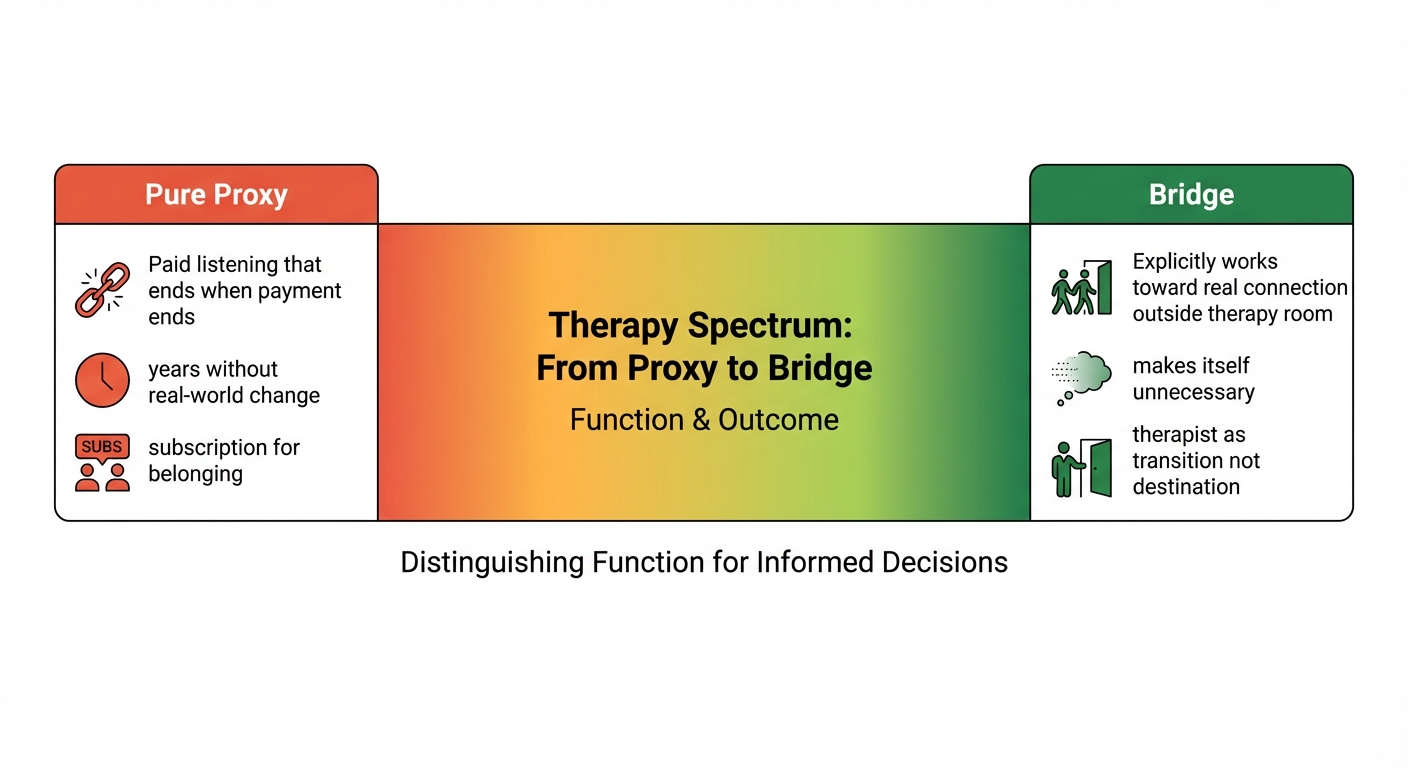
The Proxy Trap
Therapy can become a substitute for what the client actually needs. Weekly sessions as replacement for tribe. The therapist as the only person who "really understands." Permanent dependence instead of time-boxed bridge.
Watch for:
- • Client has more intimacy with you than anyone in their actual life
- • Years of sessions without environmental change
- • You becoming part of their "tribe" instead of pathway to real tribe
- • Insight without action, understanding without building
The Bridge Role
Your job is to help them build what they need, then exit.
Time-box from the start. Every session should ask: "What will you build this week in the real world?"
Success = they don't need you anymore. Not because they've "managed their symptoms" but because they've built what they actually need.
For Your Practice
For Therapists & Clinicians
- •Ask about environment before reaching for DSM
- •Assess tribe, closure, contribution before diagnosis
- •Prescribe environmental interventions before medication
- •Time-box treatment with explicit bridge framing
- •Become a voice from inside-you know the system is failing
For Parents
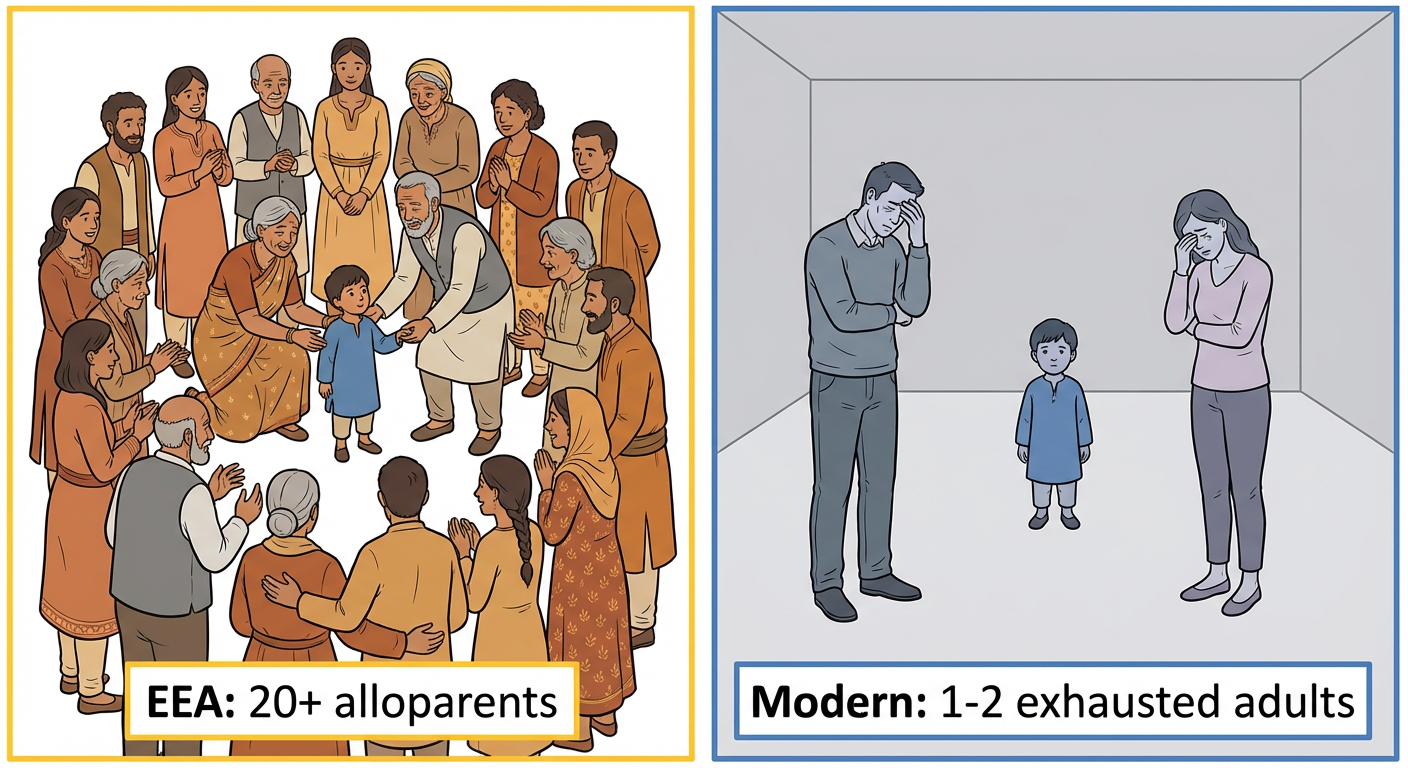
- •Understand what your child actually needs: alloparenting, mixed-age play, real contribution, physical contact, embodied risk
- •Stop pathologizing hunter cognition as "ADHD"
- •Build village structures-not just your nuclear family
- •Resist pressure to medicate signals into silence
- •Limit screens not as moralism but as biology
For Educators
- •Recognize that movement, novelty, varied focus are features not bugs
- •Design for contribution (students do real things for real people)
- •Enable mixed-age interaction where possible
- •Get kids outside, moving, using their bodies
- •Advocate for systemic change-you see the mismatch every day
Practice Resources
The Bigger Picture
The psychiatric paradigm-brain as isolated organ, symptoms as malfunction, medication as correction-is a 20th century framework that the evidence no longer supports.
Across fields, practitioners are recognizing:
- •Most conditions labeled "mental illness" are accurate biological responses
- •Environmental interventions often outperform medication
- •Long-term outcomes of standard treatment are poor
- •The "helping" industry is often part of the problem
You're not crazy for sensing this. Your voice matters.
The goal isn't just reducing suffering. It's building the foundation for human thriving — and then the technology that extends it.
See the destination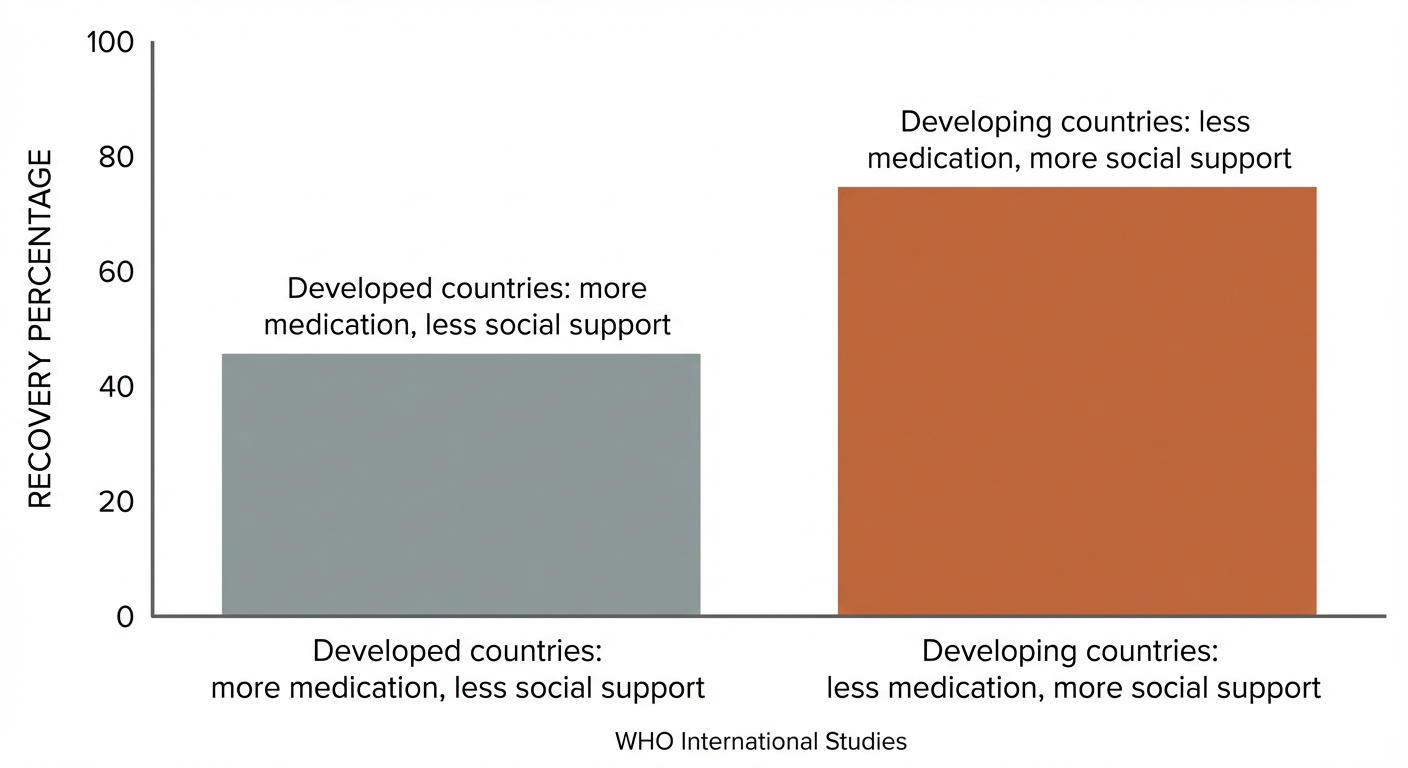
Your Tools
Be the Bridge
You see people in pain every day. Most of that pain is environmental. You can be the bridge that helps them build what they actually need-then step back as they thrive.
That's the work.